
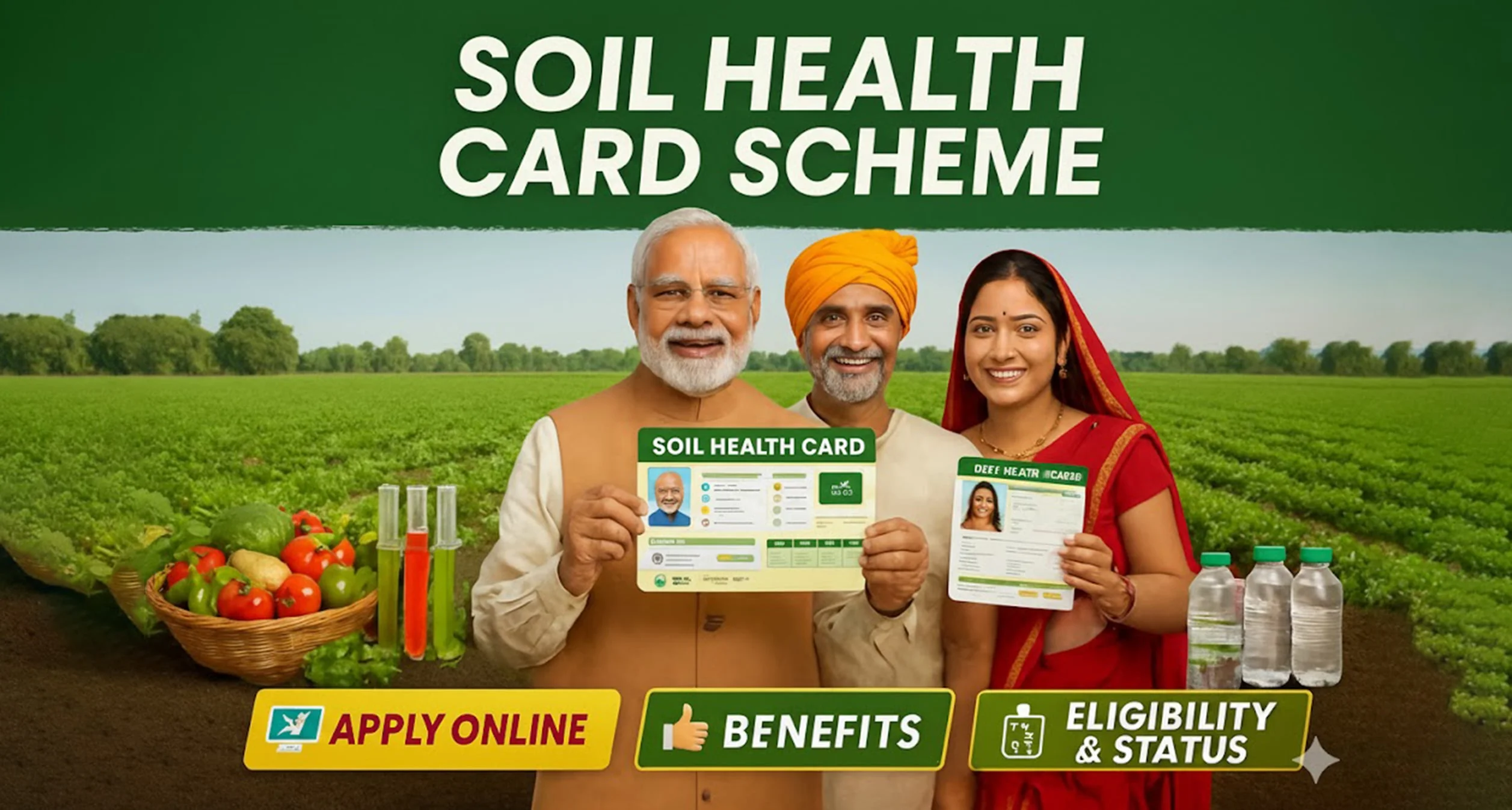
Soil Health Card Scheme: Apply Online, Benefits, Eligibility & Status
The Soil Health Card scheme is one of India’s most important agricultural initiatives, designed to help farmers understand the health of their soil and use fertilizers in a balanced, scientific way. Healthy soil directly affects crop yield, input cost, and long-term farm sustainability. Through this Card programme, farmers receive a detailed report of their soil’s nutrient status along with crop-wise recommendations, enabling better farming decisions.
The Soil Card initiative focuses on improving productivity while reducing unnecessary fertilizer use. By promoting soil testing and data-driven agriculture, the scheme supports sustainable farming practices across India.
What is a Soil Health Card?
A Soil Health Card is a printed or digital report that provides information about soil nutrients, pH level, organic carbon, and micronutrients. Based on scientific soil testing, this Card helps farmers know what their soil actually needs instead of relying on guesswork. The importance of the Soil Card lies in its ability to reduce costs, improve crop quality, and protect soil fertility. Farmers using this Card recommendations often see improved yields and reduced expenditure on fertilizers.
Objectives of the Soil Health Card Scheme in India
The Soil Health Card scheme was launched with multiple objectives:
- To promote soil testing on a large scale
- To provide farmers with accurate soil nutrient information
- To encourage balanced use of fertilizers
- To improve soil fertility and crop productivity
- To support sustainable and eco-friendly agriculture
These objectives make the Soil Health Card scheme a long-term solution rather than a short-term subsidy-based approach.
Soil Health Card Portal – Overview and Purpose
This Card serves as the digital backbone of the scheme. It allows authorities to manage soil testing data and farmers to access their Soil Card reports online. Through the portal, farmers can check status, download reports, and understand fertilizer recommendations in a simplified format. The portal also supports transparency and efficient monitoring of soil health data at the national and state levels.
How the Soil Health Card Scheme Works (Step-by-Step Workflow)
The Soil Health Card Scheme works through a scientific, transparent, and multi-stage process to ensure farmers receive accurate and reliable information about their soil health. The entire workflow is designed by the Government of India to cover soil sampling, testing, analysis, recommendation generation, and final distribution of the Soil Card. This structured approach helps eliminate guesswork in fertilizer usage and promotes balanced nutrient management, which directly improves crop productivity and soil sustainability.
Soil Sample Collection Process
The soil sample collection process is the foundation of the Soil Health Card scheme. Trained personnel from agriculture departments, Krishi Vigyan Kendras (KVKs), or authorized agencies collect soil samples from farmers’ fields following standardized national guidelines. Samples are collected using a grid-based or field-based method, where soil is taken from multiple locations and depths within the same field. This ensures the soil sample truly represents the overall condition of the land.Special care is taken to avoid contamination, and each sample is properly labeled with farmer details, location, and crop history. Proper soil sampling ensures accurate soil test results, which directly impacts the quality of the Soil Card recommendations.
Soil Testing in Authorized Laboratories
After collection, soil samples are sent to government-recognized and accredited soil testing laboratories. These laboratories use modern equipment and standardized testing procedures to analyze the soil.
The soil is tested for:
- Macronutrients (Nitrogen, Phosphorus, Potassium)
- Soil pH level
- Electrical Conductivity (EC)
- Organic Carbon
- Micronutrients such as Zinc, Iron, Copper, and Manganese
The testing process ensures scientific accuracy, enabling precise fertilizer and nutrient recommendations. These lab results form the backbone of the Soil Card report.
Preparation of Soil Health Card Report
Once soil testing is completed, a detailed Soil Card report is generated using digital systems. This report converts complex laboratory data into farmer-friendly information.
It includes:
- Nutrient status (low, medium, high)
- Soil reaction (acidic, neutral, alkaline)
- Crop-wise fertilizer recommendations
- Suggested soil amendments and corrective measures
The report is customized based on local cropping patterns and agro-climatic conditions, making it highly relevant for farmers.
Distribution of Soil Health Card to Farmers
After preparation, the Soil Card is distributed to farmers through multiple channels. Farmers may receive:
- A physical Soil Card, or
- A digital Soil Card via the official Soil Health Card portal
Farmers can also access their Soil Card online using their mobile number, registration ID, or village details. This digital access improves transparency and allows farmers to download and reuse their Soil Card anytime.
What Information Is Included in a Soil Health Card
A Soil Health Card provides a complete snapshot of soil condition, enabling farmers to make informed decisions for better crop management. The information is presented in a simple and easy-to-understand format.
Macronutrients (N, P, K) in Soil Health Card
The Soil Health Card displays the status of three primary macronutrients:
- Nitrogen (N): Essential for plant growth and leaf development
- Phosphorus (P): Important for root growth and flowering
- Potassium (K): Enhances disease resistance and crop quality
Each nutrient is classified as low, medium, or high, helping farmers apply fertilizers in the correct quantity and avoid wastage.
Micronutrients and Soil Parameters
In addition to macronutrients, the Soil Card includes micronutrients and soil parameters that are crucial for long-term soil fertility:
- Zinc
- Iron
- Copper
- Manganese
- Soil pH
- Organic Carbon
These parameters help identify hidden deficiencies that often reduce crop yield without visible symptoms. Correcting micronutrient imbalance improves soil structure, nutrient absorption, and crop health.
Crop-Wise Fertilizer Recommendations
One of the most valuable features of the this Card is crop-wise fertilizer recommendations. Instead of generic advice, the Soil Card provides:
- Fertilizer type
- Recommended dosage
- Application timing
These recommendations are tailored for crops commonly grown in the region, ensuring maximum yield with minimum input cost.
Benefits of Soil Health Card Scheme for Farmers
This Card scheme delivers long-term economic and environmental benefits to farmers by promoting scientific soil management.
Improved Crop Yield and Productivity
By following Soil Card recommendations, farmers can address nutrient deficiencies effectively. Balanced nutrient application leads to stronger plants, healthier roots, and higher crop yields.
Reduced Fertilizer Cost
The Soil Card helps farmers avoid excessive fertilizer use. Applying only required nutrients reduces input costs and prevents soil degradation, making farming more cost-effective.
Sustainable Soil and Water Management
The scheme promotes environment-friendly farming practices by preventing overuse of chemical fertilizers. Healthy soil retains moisture better and supports sustainable agriculture for future generations.
Better Income for Farmers
Higher yields combined with lower fertilizer costs result in increased net income for farmers. Over time, improved soil fertility also reduces dependency on external inputs.
Eligibility Criteria for Soil Health Card Scheme
The Soil Card scheme is inclusive and farmer-friendly.
Eligible beneficiaries include:
- Small and marginal farmers
- Large landholding farmers
- Tenant farmers and sharecroppers (as per state norms)
In most cases, land ownership is not mandatory, making the scheme accessible to a wide range of farmers across India.
Documents Required for Soil Health Card
Commonly required documents include:
- Aadhaar card
- Land records or cultivation proof
- Mobile number
- Bank account details (if required by state)
How to Apply for Soil Health Card Online
Farmers can apply for the Soil Health Card through the official portal or local agriculture offices.
Step-by-Step Online Application Process
- Visit the official portal
- Enter farmer details
- Submit required information
- Track application status online
Offline Application Through Agriculture Department
Farmers who are unable to apply online can register for the Soil Health Card scheme through offline channels. This option is designed to support farmers in areas with limited digital access and ensures that the benefits of the scheme reach every eligible applicant.
Additional Important Points
- Applications are processed with the help of local agriculture extension officers
- Farmers receive guidance on soil sampling methods and timelines
- Offline applications reduce the risk of incorrect data entry
- Suitable for farmers who do not own smartphones or internet access
- Helps elderly and less-literate farmers through on-ground assistance
- Ensures last-mile delivery of the Soil Card scheme
How to Check Soil Health Card Status Online
Farmers can easily check their Soil Card status online through the official portal. By entering details such as mobile number, registration ID, village name, or farmer ID, users can track the progress of their application.
The online status feature helps farmers know whether:
- Soil samples have been collected
- Laboratory testing is completed
- Soil Health Card report is generated
- Card is ready for download or distribution
How to Download Soil Health Card Report
Once the Soil Card report is generated, farmers can download the Card in PDF format from the official website. The digital report contains complete soil nutrient details, fertilizer recommendations, and soil parameters in an easy-to-understand format.
Soil Health Card allows farmers to:
- Store the report for future reference
- Plan fertilizer application more accurately
- Use the same report across multiple cropping seasons
Digital availability supports data-driven and scientific farming practices.
Soil Health Card Under RKVY Scheme
This Card scheme is supported under the Rashtriya Krishi Vikas Yojana (RKVY), which provides financial and administrative backing for its nationwide implementation. RKVY aims to strengthen agricultural development by supporting state-level initiatives, with soil health as a key focus area.
Under RKVY, funding is provided for:
- Soil testing laboratories
- Mobile soil testing units
- Capacity-building and farmer awareness programs
Role of Ministry of Agriculture and Farmers Welfare
The Ministry of Agriculture and Farmers Welfare is the nodal authority responsible for policy formulation, funding allocation, and nationwide monitoring of the Soil Health Card scheme. The ministry coordinates with state governments to ensure uniform implementation and adherence to scientific standards.
Its role includes:
- Issuing operational guidelines
- Monitoring soil testing quality
- Evaluating scheme performance
- Promoting awareness among farmers
Central oversight ensures consistency, transparency, and credibility across all states.
Soil Mapping and Digital Soil Health Records
Soil mapping and digital soil health records are advanced components of the Soil Health Card scheme. Soil test data is converted into GIS-based digital soil maps, helping authorities identify nutrient deficiencies at regional and district levels.
Digital soil records are useful for:
- Crop planning and diversification
- Long-term soil fertility monitoring
- Evidence-based policy decisions
- Research and agricultural innovation
This digital approach strengthens precision agriculture and sustainable land management.
Validity of Soil Health Card and Update Cycle
A Soil Card is generally valid for two to three years, after which soil testing is repeated. Soil properties can change due to cropping patterns, fertilizer use, irrigation practices, and climatic conditions, making periodic testing essential.
Regular updates ensure:
- Accurate nutrient recommendations
- Improved fertilizer efficiency
- Prevention of soil degradation
Timely renewal helps farmers maintain soil health over the long term.
Common Problems Faced by Farmers and Solutions
Some farmers face challenges such as delayed Soil Card delivery, limited awareness of the scheme, or difficulty understanding soil test reports. These issues are gradually being addressed through digital platforms, SMS alerts, and training programs conducted by KVKs and agriculture departments. Simplified report formats and on-field guidance are helping farmers use Soil Cards more effectively.
Best Practices to Use Soil Health Card Effectively
To maximize the benefits of the Soil Card, farmers should:
- Follow fertilizer recommendations provided in the report
- Adopt crop rotation and diversified cropping systems
- Use organic manure and green manuring
- Repeat soil testing at recommended intervals
These best practices help maintain soil fertility, reduce input costs, and improve long-term agricultural productivity.
Frequently Asked Questions (FAQs)
Official Sources and References
The information provided in this article is compiled from official government guidelines, policy documents, and verified portals related to the Soil Card Scheme. These sources ensure accuracy, reliability, and alignment with the latest updates issued by the Government of India. Farmers and readers are advised to refer to the official platforms below for real-time data, notifications, and services related to the Soil Card.
Official Government Websites
- Soil Health Card Official Portal: https://soilhealth.dac.gov.in
- Ministry of Agriculture & Farmers Welfare (MoAFW): https://agricoop.nic.in
- Department of Agriculture & Farmers Welfare: https://www.india.gov.in/topics/agriculture
- Rashtriya Krishi Vikas Yojana (RKVY): https://rkvy.nic.in
These official sources provide detailed information on scheme guidelines, application processes, soil testing standards, and farmer advisories, making them the most trusted references for understanding and using the Soil Health Card Scheme effectively.
Conclusion:
The Soil Health Card scheme empowers farmers with scientific knowledge, reduces costs, improves productivity, and supports sustainable agriculture. Adopting Soil Card recommendations is a smart step toward profitable and eco-friendly farming.